

Renovating in Knightsbridge & Mayfair: Licences, Building Management Rules, Contractor Pitfalls and the Realities of Executing a High-End Project in Central London

Updated: Apr 22
Renovation in central London is often misunderstood. From the outside, the process may look like a simple design exercise—a matter of choosing finishes, updating a kitchen or modernising a bathroom. But anyone familiar with Zone 1 properties knows that renovating in Knightsbridge, Mayfair or Kensington is a highly technical, deeply structured and often regulation-heavy journey.
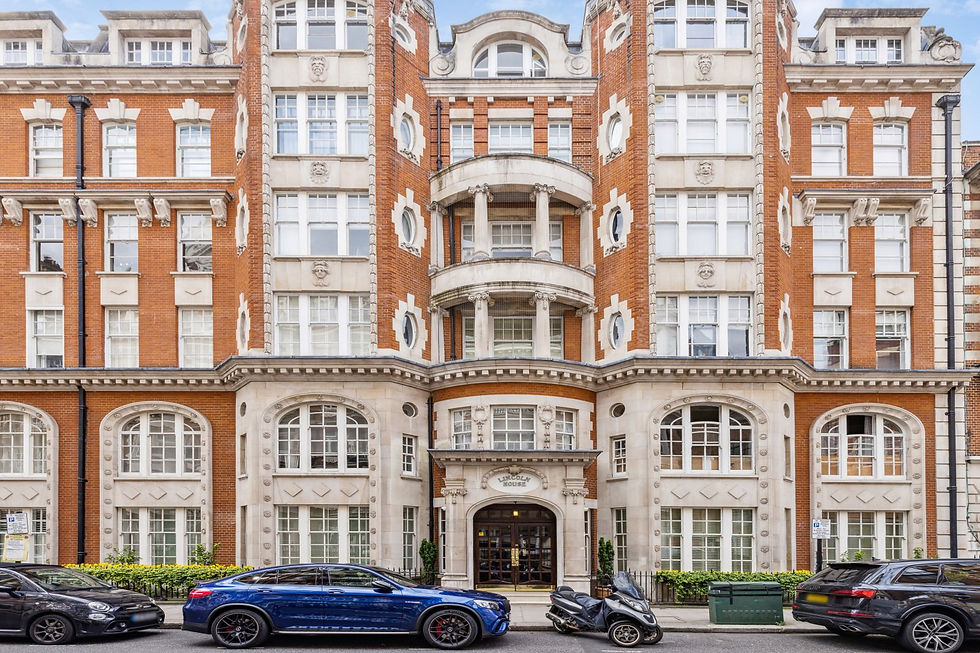
Most buildings in these districts were constructed decades, sometimes over a century ago. Their character is beautiful, but the internal logic of these structures rarely aligns with today's standards of comfort, lighting, plumbing, acoustics or spatial flow.
This complexity is precisely why London's most successful renovations rely not just on design, but on design-led execution.
In this article, I explore the reality of renovating in prestigious central London neighbourhoods—from contractor mistakes to Licence of Alterations, from custom-made joinery to planning permissions, from heritage constraints to time and cost management.
1. Understanding Zone 1 Buildings — Old Structures, Modern Life
A flat in Knightsbridge or Mayfair often looks charming at first glance: period facades, tall windows, ornate details.
Yet once inside, the challenges become clear:
Narrow corridors
Ageing plumbing
Limited electrical capacity
Uneven floors
Moisture behind walls
Outdated bathrooms and kitchens
Unconventional room shapes
And in many cases, the property is part of a listed building, where the rules become even more detailed.
In listed properties, even the smallest intervention—removing a partition, relocating a bathroom, altering a window treatment—may require:
Heritage assessments
Strict material specifications
Approvals from conservation officers
Renovation becomes a dialogue between respecting history and enabling modern living.
This balance is only possible with a professional team that understands both design and the technical structure of London's period architecture.
2. The Contractor Reality in London — Why Precision Matters
London has countless small contractors.
Some are excellent, but many operate without the standards required for Zone 1 projects.
Here are the most common issues:
a) Lack of Proper Certifications
Electrical work must be NICEIC-certified
Gas work must be Gas Safe registered
Ventilation, fire safety and drainage also require formal certificates
Many contractors simply do not have these qualifications.
This creates safety risks—and more importantly, building management will not approve uncertified work.
b) Disputes and Finger-Pointing
A familiar London story:
"When something went wrong, every contractor blamed the other."
This happens because each team works in isolation.
Zone 1 projects require a unified design–execution structure—not fragmented labour.
c) Strict Building Management Rules
After years of poor workmanship from small contractors, many Knightsbridge & Mayfair buildings enforce strict rules:
Limited working hours
Mandatory insurance levels
Noise restrictions
Strict delivery protocols
Documentation before any work begins
A design-led execution firm handles these relationships professionally, ensuring the project can proceed without conflict or delay.
Real Case Study: Two Flats, Two Timelines, One Building
In 2023, we were approached by a family with properties in Dubai and the USA who travel frequently between cities. They had just purchased a 3-bedroom flat in Mayfair and needed it fully renovated for their children's stays during the school term.
The Challenge
The flat required:
Complete electrical rewiring
New plumbing infrastructure
Custom-made wardrobes for three bedrooms
Open-plan kitchen with bespoke cabinetry
Two bathrooms fully refurbished
Acoustic flooring installation
Smart home system integration
The Timeline: 12 Weeks
We completed the project in 3 months, including:
2 weeks for Licence of Alterations approval
10 weeks for full execution and certification
The family was able to move in before the autumn term began.
The Contrast
Interestingly, another flat on a different floor of the same building was being renovated simultaneously by a traditional contractor team.
When we handed over our project, their renovation was still ongoing.
Eight months later, that project still had not been completed.
The building management told us the contractor had:
Failed to provide proper electrical certification
Missed multiple delivery windows
Created disputes with neighbours over noise
Had to redo plumbing work twice due to non-compliance
This is not an isolated story. It is the standard reality of working with fragmented teams in Zone 1
3. Licence of Alterations — The Heart of Any Renovation
In central London, the most important document for any interior project is the Licence of Alterations.
This licence is the freeholder's formal permission for:
Structural changes
Layout modifications
Electrical & plumbing alterations
Acoustic works
Flooring upgrades
Bathroom relocation
Any intervention that affects the building
What a Proper Licence Application Includes:
A professional application typically requires:
✅ Structural engineer calculations✅ Acoustic reports✅ Plumbing & drainage proposals✅ Electrical load assessment✅ Fire compliance details✅ High-level drawings & method statements✅ Heritage information (if applicable)
Most contractors cannot prepare these documents.
They require a hybrid team—design, engineering and execution working together.
This is the exact space where firms like Kapeti operate: we resolve risks before the project starts, ensuring building management approves the work quickly and smoothly.
4. Planning Permission — A Technical Discipline, Not Paperwork
Planning permission is sometimes necessary even for internal alterations, especially if:
A flat is part of a listed building
Ventilation routes are being modified
Structural openings are added
External elements are affected
Mechanical systems are installed
Planning applications often require:
Heritage statements
Structural reports
Fire strategy considerations
Environmental or acoustic notes
This is not typical "design work"; it is a highly specialised discipline requiring technical literacy and familiarity with London councils' behaviours.

5. Custom-Made Furniture — In Zone 1, It Is a Necessity
Most flats in Knightsbridge or Mayfair have:
Asymmetric walls
Unusual alcoves
Awkward corners
Narrow bedrooms
Odd structural columns
Limited wardrobe space
Custom-made joinery is not a luxury here—it is the only way to make the space truly functional.
The UK Joinery Challenge
In the UK, bespoke joinery is:
Extremely costly
Slow (3–6 months lead time)
Difficult to coordinate with construction timelines
Kapeti's Solution
Our model solves this problem efficiently:
✅ We design joinery to exact geometry
✅ Production is done abroad at high quality
✅ Manufacturing happens parallel to on-site works
✅ Items arrive in London ready for installation
This shortens renovation timelines dramatically—typically 8-10 weeks from design approval to installation.
6. Certification-Oriented Execution — Essential for Property Value
At the end of a renovation, the following must be delivered:
✅ NICEIC electrical certification
✅ Gas Safe certification
✅ Fire safety compliance documentation
✅ Plumbing certificates
✅ Ventilation testing
✅ As-built drawings for future reference
These documents:
Protect the owner
Increase property value
Make renting easier
Reassure building management
Ensure full legal compliance
Without certification, even the best renovation loses credibility—and sometimes approval.
7. Supply Chain, Deadlines and Real Project Management
Time is the most expensive resource in a Zone 1 renovation.
Delays often come from:
Misaligned deliveries
Long joinery lead times
Slow decision-making
Planning or licence delays
Contractor changes
Poor coordination
How Professional Teams Work Differently
A professional design-execution team manages everything in parallel:
Joinery production starts while permissions are in progress
Demolition begins while technical drawings are finalised
Procurement syncs with construction stages
Materials arrive exactly when needed
A properly managed project can finish in 8–12 weeks.
A poorly managed one can take 8–12 months—without producing better results.
8. Understanding International Families — Why Cultural Familiarity Matters
Families who travel frequently between London, the Gulf and other global cities often prioritise:
Generous storage solutions
Clean, uncluttered layouts
Separate service areas
Privacy-oriented planning
High-quality, durable finishes
Quiet mechanical systems
Technology integration for remote management
Kapeti's experience across Turkey, the UK and the Gulf region means we instinctively understand these needs—and design & execute accordingly.
Cultural comprehension is not a detail; it is what makes a London property feel like home for an international family.
Kapeti vs. Traditional Approaches: What Makes the Difference?

Understanding Renovation Costs in Zone 1
A typical comprehensive Zone 1 renovation in Knightsbridge or Mayfair generally ranges between £150,000 - £300,000, depending on:
Property size (1-3 bedrooms)
Level of customisation
Quality of finishes
Structural complexity
Custom joinery requirements
Technology integration
What This Budget Typically Includes:
✅ Complete electrical rewiring
✅ New plumbing infrastructure
✅ Kitchen & bathroom refurbishment
✅ Custom-made wardrobes & storage
✅ Flooring throughout
✅ Decoration & finishing
✅ All certifications & documentation
✅ Project management & coordination
Transparency matters. At Kapeti, we provide detailed cost breakdowns during the initial consultation so there are no surprises later.
Ready to Start Your Renovation?
If you own or plan to purchase a property in central London, we offer a complimentary pre-purchase technical assessment to help you understand:
Structural considerations
Renovation potential
Realistic timelines
Budget expectations
Licensing requirements
This consultation can save you significant time and money—especially if you're comparing multiple properties.
Direct Call: 07342240695
Conclusion
Renovation in Knightsbridge and Mayfair is a sophisticated, multi-layered process.
Success depends on:
✅ Deep technical expertise
✅ Precise design
✅ Strong engineering support
✅ Disciplined project management
✅ Excellent supplier coordination
✅ Clear understanding of international clients' expectations
Kapeti brings all these elements together—not as a design studio alone, nor as a contractor alone, but as a hybrid design-execution partner handling the entire process from concept to completion.
Whether you're preparing to purchase or have just acquired a Zone 1 property, we're here to guide you from the very first step to the final handover.
For a detailed look at flat and house renovation costs, timelines and approvals specific to SW3, SW10, SW1 and SW7 — see our comprehensive 2026 guide to renovating in Chelsea, South Kensington, Belgravia and Pimlico.


Comments